

Sheryl Kara Sandberg was born on 28 August 1969 in Washington, D.C. The daughter of a teacher and an ophthalmologist, she grew up in Florida excelling academically, graduating at the top of her high school class. From early on, she combined sharp intelligence with a drive to lead.
Before we continue, a quick word from today’s sponsor:
A pro traders #1 rule when trading options
Scott Redler has spent 30 years mastering one thing: sticking to a proven strategy. And with over 200k followers, he’s helped others trade stocks.
Now, he’s finally cracking open his options playbook for the masses to see. That’s because volatility in the markets makes options a winning strategy. Plus a recent 423% winner on BABA in 1 day! It’s about understanding risk vs. reward.
Scott is sharing exactly how he does it in a free report & 15-minute video.

Sandberg studied economics at Harvard, where she met her mentor, Professor Larry Summers. After graduating in 1991, she worked as his research assistant and followed him to the U.S. Treasury Department, where she served as Chief of Staff under the Clinton administration.
In 2001, she joined Google as Vice President of Global Online Sales and Operations. She played a pivotal role in building the company’s advertising infrastructure, scaling AdWords and AdSense into major revenue streams that powered Google’s growth.
Her biggest career move came in 2008, when she joined Facebook as Chief Operating Officer. At the time, Facebook was still an emerging social network with little revenue. Sandberg transformed it into a profitable business by building its advertising model and scaling operations. Her leadership helped turn Facebook (later Meta) into one of the most valuable companies in the world.
Beyond her corporate success, Sandberg became a global voice for women in leadership. Her 2013 book Lean In sparked a movement encouraging women to pursue ambition in the workplace and advocating for systemic change in corporate culture.
Sandberg also endured personal tragedy when her husband, Dave Goldberg, died suddenly in 2015. She shared her grief openly in her book Option B, turning personal loss into a broader conversation about resilience.
After 14 years at Meta, she stepped down as COO in 2022, leaving behind a legacy of operational excellence and cultural impact.
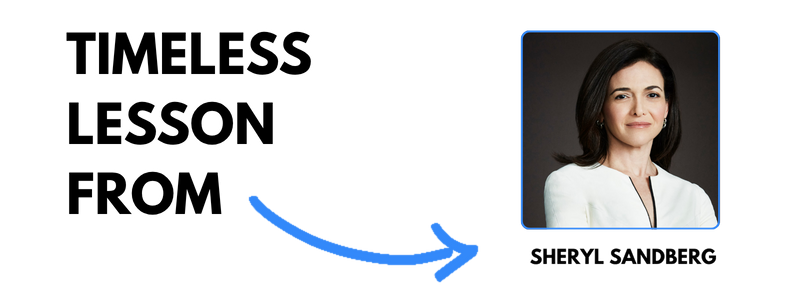
Operational Brilliance Creates Impact
Sheryl Sandberg’s gift was turning vision into systems. At Google, she built the ad infrastructure that became the company’s financial engine. At Facebook, she transformed a popular platform into one of the most profitable businesses in the world. Her power wasn’t in creating the product, but in making it scale.
Her story shows that great ideas are fragile without structure. Vision needs execution, and execution needs discipline. By building the machine behind the mission, she gave ideas the leverage to reach billions.

Sandberg proves that not all leadership is about being the visionary. Sometimes it’s about building the scaffolding that lets vision grow sky-high. True impact often comes from the people who make things work at scale. You don’t have to invent the spark — if you master the system, you can spread the fire.
Until next time,
The Chronicler