

Richard Branson was born on 18 July 1950 in Surrey, England. Struggling with dyslexia, he left school at 16 with poor grades and little confidence from teachers. Yet he carried two traits that would define him for life: a rebellious spirit and an instinct for adventure.
A quick word from today’s sponsor:

Turn AI into Your Income Engine
Ready to transform artificial intelligence from a buzzword into your personal revenue generator? Our groundbreaking guide "200+ AI-Powered Income Ideas" is your gateway to financial innovation in the digital age.
Inside you'll discover:
• A curated collection of 200+ profitable opportunities spanning content creation, e-commerce, gaming, and emerging digital markets—each vetted for real-world potential
• Step-by-step implementation guides designed for beginners, making AI accessible regardless of your technical background
• Cutting-edge strategies aligned with current market trends, ensuring your ventures stay ahead of the curve
Download your guide today and unlock a future where artificial intelligence powers your success. Your next income stream is waiting.

Branson’s first business was a magazine called Student, launched while still a teenager. Soon after, he started a mail-order record business, which grew into the first Virgin record store in London in 1971. Virgin Records quickly made waves by signing controversial and groundbreaking artists, from Mike Oldfield to the Sex Pistols.
Over the next decades, Branson built Virgin into a sprawling empire. Virgin Atlantic disrupted the airline industry with superior service and bold marketing stunts, including Branson dressing as a flight attendant on a rival airline. Virgin expanded into trains, mobile phones, health, and even space travel with Virgin Galactic.
Branson became known not just as a businessman but as a brand himself, a daredevil entrepreneur who crossed oceans in hot air balloons, windsurfed with celebrities, and posed for outrageous PR stunts. His appetite for risk was as much a marketing tool as it was a personal thrill.
Not every venture succeeded. Virgin Cola fizzled, Virgin Brides failed, and other projects collapsed. But Branson’s willingness to try, fail, and keep moving made him one of the UK’s most admired entrepreneurs.
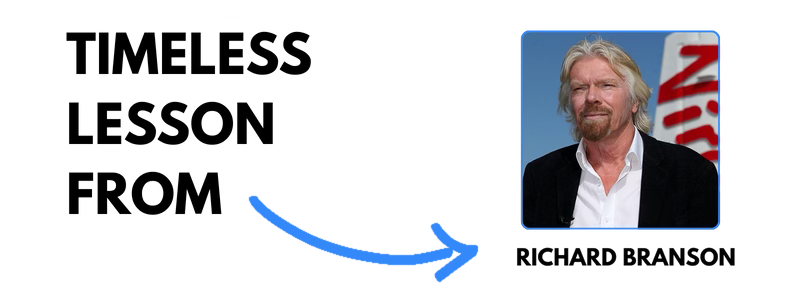
Make Risk Part of the Story
Richard Branson’s career shows that business is not only about spreadsheets and margins. It is also about energy, story, and audacity. His ventures often started with a question: “Why not?” Why not challenge British Airways with Virgin Atlantic? Why not launch a space tourism company when rockets were still the domain of governments?
Crucially, Branson accepted that failure was part of the process. Some of his companies crashed, but the Virgin brand survived because the narrative was bigger than any single product. The world didn’t just buy Virgin’s services, it bought Branson’s adventurous spirit.

If you want to build something that lasts, don’t hide from risk. Shape it into part of your story. A failed product is a lesson, but a bold identity built on resilience can carry you through decades.
Until next time,
The Chronicler