

Michael Jeffrey Jordan was born on 17 February 1963 in Brooklyn, New York, and raised in Wilmington, North Carolina. As a boy he was cut from his high school varsity basketball team, a setback that only fueled his determination. That drive, paired with extraordinary talent, would eventually make him the most iconic basketball player — and one of the most marketable figures — in history.
Before we continue, a quick word from today’s sponsor:

100+ ChatGPT Prompts to Revolutionize Your Day
Supercharge your productivity with HubSpot’s comprehensive guide. This free resource is your fast track to AI mastery:
- Industry-Specific Use Cases: 15+ real-world applications across various sectors
- Productivity Guide: 21 best practices to 10x your efficiency with AI
- Prompt Powerhouse: 100+ ready-to-use prompts for immediate implementation
- Challenge Buster: Overcome common AI hurdles with expert strategies
Plus, in-depth sections on email composition, content creation, customer support, and data analysis.

Jordan starred at the University of North Carolina, hitting the game-winning shot in the 1982 NCAA championship as a freshman. In 1984, he entered the NBA Draft and was selected third overall by the Chicago Bulls. From the start, his athleticism, competitiveness, and charisma captured fans worldwide.
Over 15 seasons, Jordan led the Bulls to six NBA championships, earning five MVP awards and becoming a global symbol of excellence. His intensity in practice and games gave rise to the term “the Jordan effect”, raising the performance of everyone around him.
Off the court, Jordan transformed the business of sports. His partnership with Nike led to the launch of Air Jordans in 1985, a brand that revolutionized athletic footwear and remains a cultural phenomenon today. Beyond endorsements, he became a savvy businessman, eventually purchasing majority ownership of the Charlotte Hornets.
Jordan also experienced setbacks. His brief retirement to play baseball in 1993 puzzled fans, and his stint with the Washington Wizards late in his career did not match his Chicago glory. Yet none of this diminished his enduring impact as both an athlete and entrepreneur
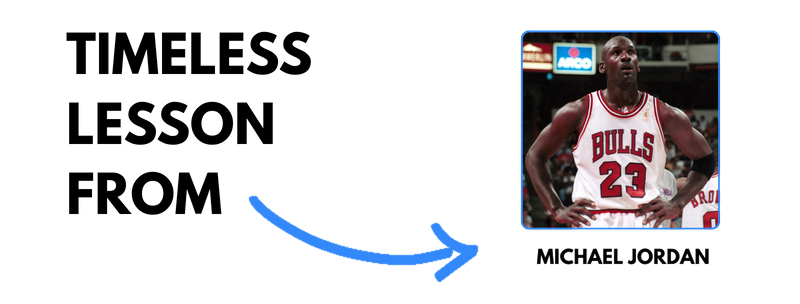
Excellence Is Contagious
Michael Jordan wasn’t just the best player on the court, he infected everyone else with his obsession. He practiced harder than anyone, demanded more than anyone, and made it impossible for teammates to settle for less. It was uncomfortable, even brutal at times, but it built six championships.
The same principle fueled Air Jordan. It wasn’t just another sneaker deal. Jordan insisted on performance, style, and authenticity. The product carried his standard, and people felt it every time they laced up a pair.
The lesson is this: raise your level, and you raise the room. True leaders don’t just chase excellence, they force it to spread.

Jordan’s career shows that excellence isn’t a moment, it’s a standard. He demanded as much from teammates as he did from himself, raising the level of everyone around him. Championships were the product of relentless practice and uncompromising standards.
His legacy proves that greatness spreads when you make excellence contagious.
Until next time,
The Chronicler