

William Henry Gates III was born on 28 October 1955 in Seattle, Washington. The son of a lawyer and a schoolteacher, he grew up in a supportive household that encouraged curiosity and ambition. From a young age, Gates showed an unusual fascination with computers, spending hours programming at his school’s terminal, a machine most people had never seen at the time.
Before we continue, a quick word from today’s sponsor:

MarketBeat releases Top 10 Stocks to own report
While the crowd’s chasing yesterday’s headlines, the real money’s brewing in the shadows.
2026’s megatrends - AI’s takeover, consumer empires doubling down, aerial taxis rewriting travel - are already here.
And Wall Street’s too busy navel-gazing to notice.
Our 10 Stocks Set to Soar in 2026 report cracks the code on those megatrends, giving you the name and ticker of the companies at the forefront of each one.
MarketBeat’s analysts sifted the chaff to deliver these 10 picks…
And they could very well be your ticket to profits the masses will miss.
Free today, after that, it’s strictly for paid members.
Act now or watch from the sidelines later!

At 13, Gates wrote his first computer program, a simple tic-tac-toe game. By high school, he and his friend Paul Allen were already selling software to local businesses. In 1973, Gates enrolled at Harvard, but the call of the emerging personal computer industry proved stronger than academia. Two years later, he dropped out to start Microsoft with Allen.
Microsoft’s first big break came when IBM asked them to supply an operating system for its new personal computers. Gates struck a shrewd deal, licensing MS-DOS rather than selling it outright, ensuring Microsoft would profit from every IBM machine sold and later from clones built by competitors. It was a move that defined his reputation as a strategic thinker.
Through the 1980s and 1990s, Microsoft grew into the dominant force in software, with Windows becoming a global standard. By his early thirties, Gates was a billionaire, and by the late 1990s, the richest person in the world.
Yet success came with scrutiny. Microsoft faced antitrust lawsuits, accused of monopolistic practices. Gates stepped back from daily operations in the 2000s, eventually shifting his focus to philanthropy. Through the Bill & Melinda Gates Foundation, he poured billions into global health, vaccines, and education, reshaping his legacy from ruthless businessman to humanitarian.
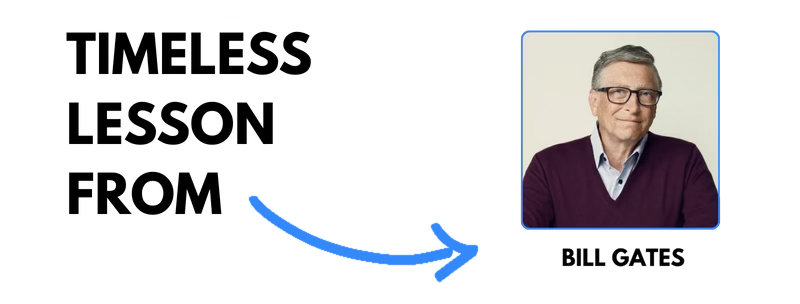
Think Long, Play Long
Bill Gates’s career shows the power of long-term thinking. Dropping out of Harvard was a risk, but it was rooted in his conviction that software would drive the future. His IBM licensing deal exemplifies this mindset, choosing recurring value over quick wins.
Later in life, he applied the same approach to philanthropy. While others donate to causes for publicity, Gates invested in systemic change, targeting malaria, polio, and education reform. His philosophy remained consistent: solve big problems by playing the long game.

Ambition is not just about starting strong, it is about sustaining vision over decades. Gates built one empire in technology and another in philanthropy because he always thought in horizons, not quarters.
Until next time,
The Chronicler
Climate change culprit is bill gate